



Table of Contents
- Is Aluminium Scaffolding Always Safer Than Steel Scaffolding?
- What Actually Determines Scaffolding Safety - Material or Method
- When Aluminium Scaffolding Is the Right and Safer Choice
- When Steel Scaffolding Provides Greater Safety Margins
- Aluminium vs Steel Scaffolding: A UAE Site Manager's Quick Reference
- How Quad Dream Helps UAE Contractors Choose the Right System
- The Verdict: It Is Not About the Material - It Is About the Match
- Frequently Asked Questions
Is Aluminium Scaffolding Always Safer Than Steel Scaffolding?
Aluminium scaffolding has a reputation for being the safer, smarter choice on site, but that reputation has conditions attached. On a recent residential project in Dubai, a contractor continued using aluminiummobile towers beyond the recommended height threshold, assuming lighter meant safer. It did not.
The reality is that safety depends on context. In construction, falls remain the leading cause of fatalities, accounting for 33.5% of all construction worker deaths globally. Many of these incidents involve working at height, where scaffolding choice and usage directly impact risk.
So, the real question is not just is aluminium scaffolding safer than steel. It is whether the chosen system matches the load, height, and conditions of the project. This aluminium vs steel scaffolding comparison is not about preference, but about making the right decision for safety on UAE sites.
What Actually Determines Scaffolding Safety - Material or Method?
Scaffolding safety is not defined by material alone. It depends on how the system is used in relation to load type, working height, site conditions, frequency of movement, and the quality of assembly. The same scaffolding material can perform safely or unsafely depending on how well it matches these factors.
In the UAE, scaffolding safety is governed by strict regulations such as the UAE Fire and Life Safety Code and OSHAD SF guidelines in Abu Dhabi, along with Ministry of Human Resources requirements for working at height. Contractor safety ratings and site approvals are directly linked to compliance with these standards, making proper implementation critical.
In practice, “method” refers to how scaffolding is planned, installed, and monitored on site. This includes pre-use inspections, regular safety checks, and supervision by trained scaffolders or site engineers, as well as ensuring systems are used within their rated load and height limits. Using scaffolding beyond these limits can lead to instability, regulatory violations, and stop-work actions on UAE sites.
When Aluminium Scaffolding Is the Right and Safer Choice
Aluminium scaffolding safety advantages become clear when the system is used in the right conditions. It is not universally safer, but in specific UAE project scenarios, it reduces risk and improves efficiency.
Lightweight Handling Reduces Manual Injury Risk
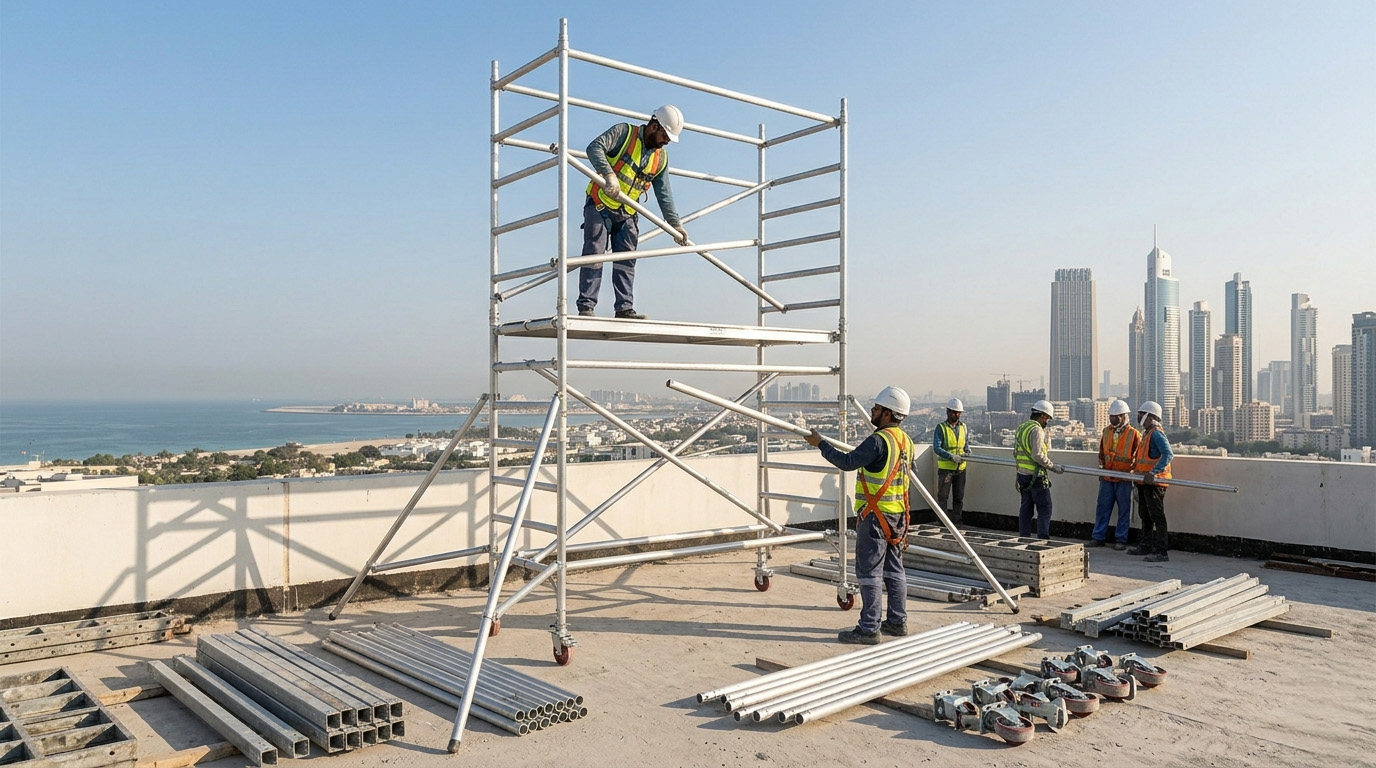
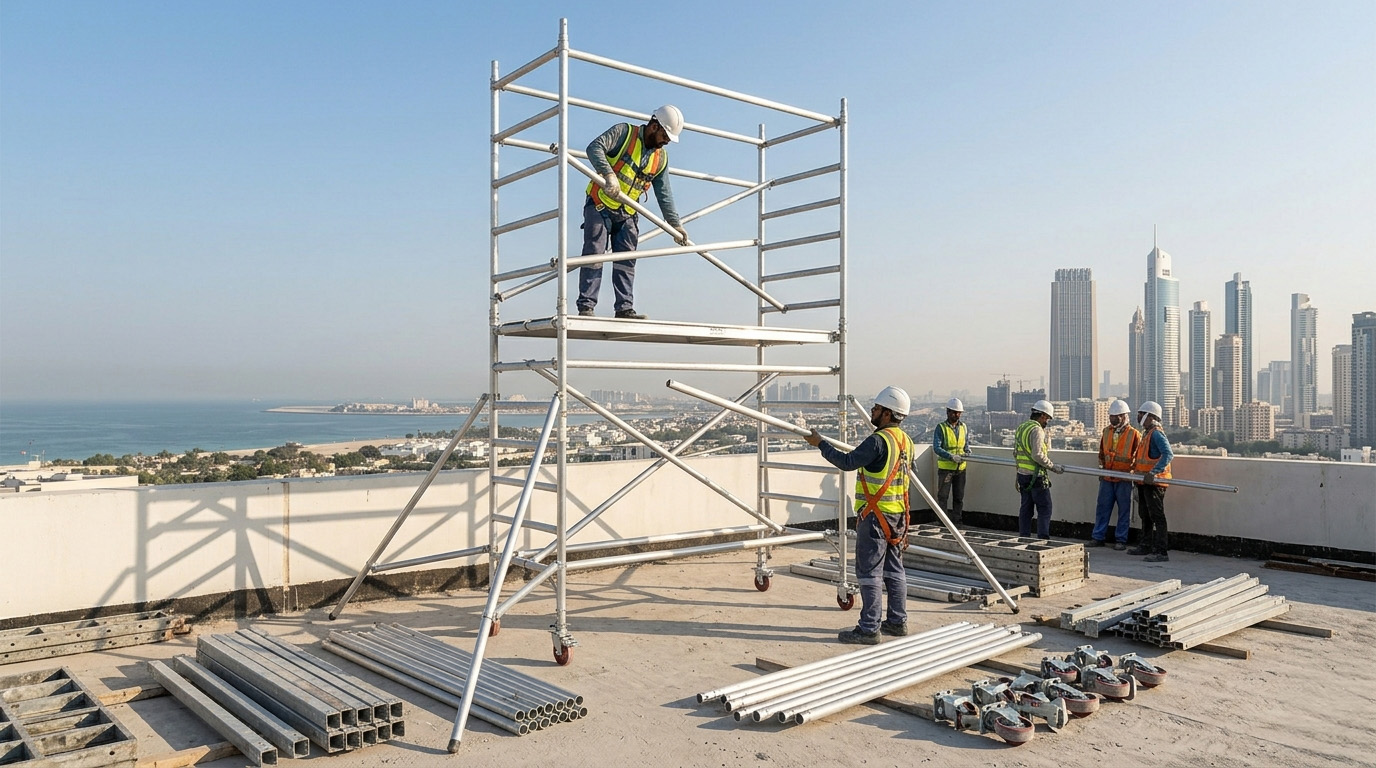
Aluminium scaffolding is significantly lighter than steel, which reduces the physical effort required during erection and dismantling. In UAE conditions where site temperatures can exceed 50°C, lower handling weight helps reduce fatigue and the risk of manual handling injuries.
This is particularly relevant for projects using mobile access systems, where frequent setup and repositioning are required. Aluminium mobile towers used in scaffolding rental support faster handling with reduced physical strain on site teams.
Corrosion Resistance in Coastal UAE Environments
Coastal regions such as Dubai, Abu Dhabi, and Sharjah expose scaffolding to high humidity and salt-laden air, often exceeding 80 to 90 percent humidity levels. In these conditions, steel scaffolding requires protective treatment to prevent corrosion, while aluminium naturally resists it.
This makes aluminium scaffolding a more reliable option for short to medium-term projects near coastal areas, where reduced maintenance supports consistent structural performance.
Safer for MEP and Electrical Works
In environments involving live electrical systems, scaffolding material becomes a critical safety factor. Aluminium scaffolding reduces electrocution risk compared to steel systems, which are conductive.
For MEP installations, plant room work, and data centre construction, this makes aluminium scaffolding a safer choice. Given that electrocution accounts for a measurable portion of construction incidents, selecting the right material directly impacts site safety.
Ideal for Frequent Relocation and Mobile Access
For projects requiring frequent movement, such as interior fit-out, façade work, or ceiling installations, aluminium systems offer better mobility. Mobile scaffolding towers can be repositioned quickly without full dismantling, improving efficiency and reducing downtime.
However, safe usage depends on height and stability limits. Aluminium mobile towers should not be used beyond recommended height thresholds without additional support and bracing, especially on UAE sites exposed to wind and temperature variations.
When Steel Scaffolding Provides Greater Safety Margins
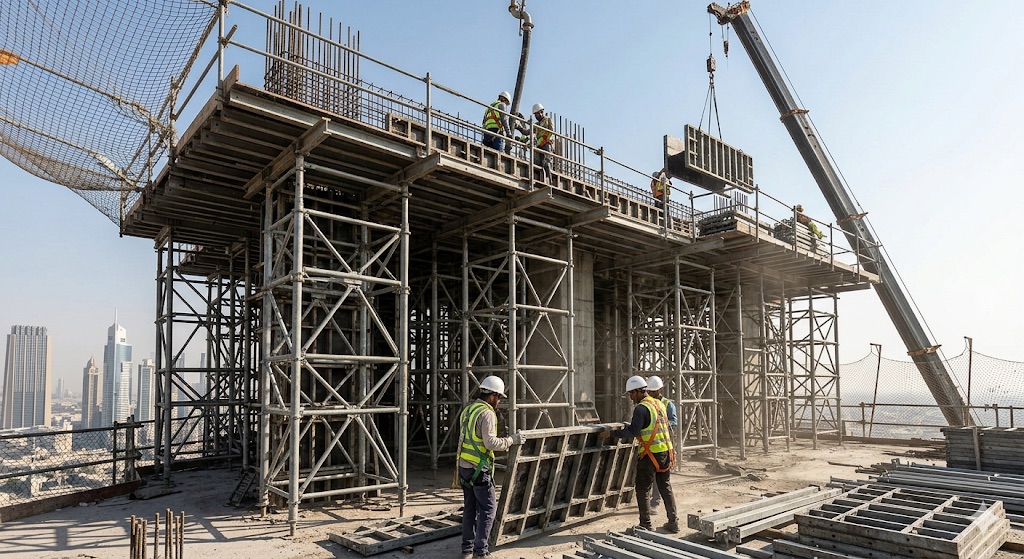
Steel scaffolding safety becomes more evident in projects where strength, stability, and long-duration performance are critical. While aluminium works well in specific scenarios, steel systems provide higher safety margins in demanding UAE site conditions.
High-Rise and Heavy-Load Projects Require Steel Strength
Steel scaffolding offers higher load-bearing capacity compared to aluminium systems. For multi-storey construction, industrial shutdowns, and platforms supporting heavy materials, this strength provides a higher factor of safety.
UAE construction standards require temporary structures to maintain strict safety margins, especially on large-scale projects. Steel systems such as cuplock scaffolding are commonly used in these environments to ensure structural stability under load. Quad Dream deploys these systems across high-load construction and industrial projects where consistent performance and compliance are critical.
Wind Load Stability on Exposed UAE Sites
Wind conditions are a major safety factor on UAE construction sites, particularly in high-rise buildings and coastal areas. Aluminium systems are more susceptible to movement under wind loads and should not be used beyond certain wind speed limits.
Steel scaffolding provides greater rigidity and lower deflection under lateral forces, making it more suitable for exposed environments. On elevated floors in Dubai or open infrastructure sites, this stability significantly improves safety.
In addition, aluminium expands nearly twice as fast as steel with temperature changes. In UAE conditions where temperatures can shift from 25°C to 55°C, this affects alignment and joint stability over time, particularly on longer-duration setups.
Better Performance on Long-Term and Multi-Phase Projects
Steel scaffolding is better suited for projects that extend over several months or involve multiple phases. Repeated erection, dismantling, and reconfiguration can cause faster wear in aluminium systems.
For long-duration construction, infrastructure projects, and industrial facilities, steel systems provide more consistent performance and durability. This results in more stable scaffolding over time and reduces safety risks associated with material fatigue.
Aluminium vs Steel Scaffolding: A UAE Site Manager’s Quick Reference
The right scaffolding material depends entirely on project conditions. This quick comparison helps evaluate aluminium vs steel scaffolding based on real UAE site requirements.
| Factor | Aluminium Scaffolding | Steel Scaffolding (Cuplock / Ringlock) |
|---|---|---|
| Weight | Around 3 times lighter, easier handling, lower fatigue risk | Heavier, may require equipment for repositioning |
| Load Capacity | Suitable for light to medium loads up to approx. 225 kg per platform | Higher load capacity for heavy-duty and multi-storey use |
| Maximum Height | Single width up to 12m, double width up to 28m platform height | Suitable for high-rise and industrial heights with proper support |
| Wind Resistance | Not suitable for high wind conditions, less stable at height | Higher rigidity, better resistance to lateral forces |
| Thermal Expansion | Expands faster under UAE heat conditions, may affect alignment | More stable across temperature variations |
| Corrosion | Naturally resistant, suitable for coastal environments | Requires galvanising or treatment in humid conditions |
| Electrical Safety | Non-conductive, safer for electrical and MEP works | Conductive, not suitable near live electrical systems |
| Assembly Speed | Faster setup with fewer components | Slower assembly with more connections |
| Best Use Case | Fit-out, maintenance, mobile access | Construction, industrial, long-duration projects |
| UAE Compliance | Suitable for short-term, light-duty use within limits | Preferred for large-scale and infrastructure projects |
How Quad Dream Helps UAE Contractors Choose the Right System
Choosing between aluminium and steel scaffolding is not just a material decision. It requires understanding load requirements, working height, site exposure, and how the system will be used throughout the project. Quad Dream supports contractors by supplying both aluminium mobile towers and steel cuplock scaffolding, ensuring recommendations are based on project needs rather than equipment availability.
Quad Dream has been operating across the UAE for over 12 years, supporting high-rise residential projects, industrial shutdowns, and commercial developments, with teams working across Dubai, Abu Dhabi, and other emirates under recognised safety and quality standards including ISO-aligned systems.
Every scaffolding deployment follows a defined QHSE process that includes pre-installation risk assessments, supervised erection by trained scaffolders, daily inspection logs, and a formal handover checklist aligned with UAE Ministry of Human Resources requirements. This ensures safety is maintained not only through the choice of scaffolding material, but also through how it is installed, monitored, and used on site.
With experience across coastal environments, high wind exposure zones, and extreme summer conditions, Quad Dream’s team applies practical system selection based on real UAE site challenges rather than assumptions.
The Verdict: It Is Not About the Material It Is About the Match
If your project involves frequent repositioning, electrical systems, or coastal environments and is expected to be completed within a shorter duration, aluminium scaffolding is likely the safer and more efficient choice. If the project involves working at height, handling heavy loads, or running across multiple phases over an extended period, steel scaffolding provides greater safety margins and long-term stability.
Safety ultimately depends on how well the scaffolding material matches the project requirements, including load, height, environment, and duration. On UAE construction sites, where conditions range from high-rise wind exposure to extreme heat and coastal humidity, selecting the right system is critical.
The real safety advantage comes from making the right choice and working with a scaffolding contractor who understands these conditions and applies the correct system based on site requirements rather than assumptions.
Whether your project requires aluminium mobile towers or a full cuplock scaffolding setup, Quad Dream can help determine the right system based on your site conditions, load requirements, and UAE compliance standards.
Frequently Asked Questions
1. What is the maximum height for aluminium scaffolding towers?
In UAE site conditions, aluminium mobile towers are typically used up to around 12 metres for single-width and higher for double-width systems with proper stabilisation. Exceeding these limits without tie-ins increases risk. In any aluminium vs steel scaffolding decision, height is a key factor influencing safety.
2.Can aluminium scaffolding be used in coastal areas of Dubai and Abu Dhabi?
Yes, aluminium scaffolding is well suited for coastal UAE environments such as Dubai and Abu Dhabi due to its natural corrosion resistance. In a scaffolding safety comparison, aluminium performs well in humid, salt-laden air where untreated steel may degrade faster if not properly protected.
3.What scaffolding system is best for façade work on commercial buildings in the UAE?
For façade work in the UAE, aluminium mobile towers are commonly used for low to mid-rise access and repositioning tasks. For high-rise buildings or extended work durations, steel systems provide better stability. The right scaffolding material depends on height, exposure, and project duration.
4.How does scaffolding material affect worker fatigue on UAE sites?
In UAE heat conditions, scaffolding material directly affects physical strain during handling. Aluminium scaffolding safety advantages include reduced weight, which lowers fatigue during erection and dismantling. In contrast, heavier steel systems may increase effort but offer better stability for long-duration and high-load applications.
5.What are the wind speed limitations for aluminium scaffolding in the UAE?
Aluminium mobile scaffolding towers in the UAE should not be used in wind speeds exceeding safe operating limits, typically around 17 mph without additional stabilisation. In an aluminium vs steel scaffolding comparison, steel systems provide greater resistance in exposed or high-rise environments with higher wind loads.


