



Table of Contents:
1. What Is the Maximum Safe Height for an Aluminum Mobile Scaffold Tower in the UAE?
2. Why the ‘12-Metre Rule’ Gets Misapplied on UAE Construction Sites
3. What Does ‘Maximum Safe Height’ Actually Mean for an Aluminum Tower?
4. Platform Height vs Working Height: Understanding the Difference
5. Height vs Configuration Reference Table
6. How UAE Site Conditions Affect Allowable Tower Height
7. 3 Dangerous Misconceptions About Aluminum Tower Height Limits on UAE Sites
8. Why Specifying Tower Height Should Come Before Specifying the Tower
10. Safe Height Is a Configuration Decision, Not Just a Number
What Is the Maximum Safe Height for an Aluminum Mobile Scaffold Tower in the UAE?
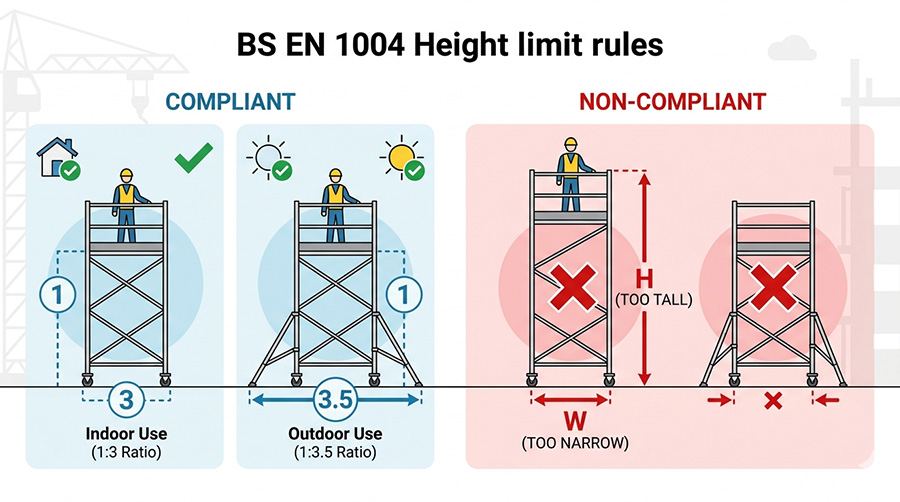
In the UAE, an aluminum mobile scaffold tower can reach a maximum working height of 12 metres outdoors and 8 metres indoors under BS EN 1004 standards. Safe height is determined by the base-to-height ratio, which is 1:3 indoors and 1:3.5 outdoors, the tower's duty rating, and ground surface conditions, not simply the number of frames stacked.
Why the ‘12-Metre Rule’ Gets Misapplied on UAE Construction Sites
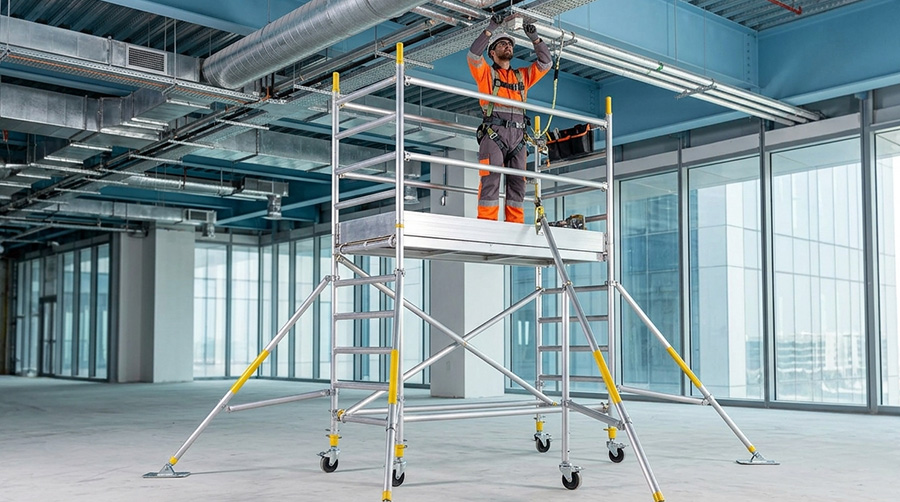
Picture a fit-out subcontractor working inside a commercial tower in Dubai. The ceiling is high, the deadline is tight, and the aluminum tower on site is two frames short of the required reach. An extra frame gets added. The supervisor checks the supplier's spec sheet, notes the 12-metre figure, and approves the setup.
The problem is that the 12-metre limit applies outdoors with outriggers fully deployed. Indoors on a polished concrete floor, that same configuration may already exceed the compliant platform height under BS EN 1004. The tower looks stable. Until it is not.
Across UAE construction sites, tower height approvals are routinely based on supplier specifications rather than the standard's actual conditions. Allowable height changes depending on indoor or outdoor placement, whether outriggers are deployed, and what the ground surface can support. A tower used even half a metre above its stability threshold on a glazed floor is a non-compliant structure, and the liability for that sits with the main contractor, not the subcontractor who added the frame.
What Does ‘Maximum Safe Height’ Actually Mean for an Aluminum Tower?
Maximum height is not a fixed number; it is a function of stability. The governing factor is the height-to-base ratio, which determines whether the tower can safely resist overturning forces.
A key distinction is between platform height and working height. Platform height refers to where the worker stands, while working height includes an additional allowance for reach. This difference often leads to incorrect height assumptions on site.
Indoor and outdoor conditions also affect allowable height. Outdoor towers are subject to wind loading, which requires stricter stability control and often mandates outriggers. The base footprint, including stabilizers, ultimately defines how high the tower can safely extend. Load class also plays a role, with higher duty ratings requiring stricter configuration control.
Height vs Configuration Reference
| Configuration | Max Platform Height | Max Working Height | Outriggers Required? | UAE / BS EN 1004 Class |
|---|---|---|---|---|
| Indoor - Standard Base | 6.2 m | 8.2 m | No (if ratio met) | Class 2 / Class 3 |
| Indoor - with Outriggers | 8.2 m | 10.2 m | Yes | Class 2 / Class 3 |
| Outdoor -Standard Base | 8.2 m | 10.2 m | No (if ratio met) | Class 2 / Class 3 |
| Outdoor - with Outriggers | 12 m | 14 m | Yes (mandatory) | Class 3 recommended |
| Stairway Frame Tower | Up to 8 m | Up to 10 m | Varies | Class 2 |
These values represent maximum limits under standard conditions. Final allowable height must always be verified by a competent person based on the actual site environment.
How UAE Site Conditions Affect Allowable Tower Height
The standard sets the ceiling. UAE site conditions frequently determine a lower practical limit.
Outdoor sites in Abu Dhabi, JAFZA, and other open industrial zones are exposed to shamal winds and periodic sandstorm conditions. Wind pressure on an elevated platform increases overturning moment significantly, and towers deployed near open facades or in unsheltered yards may need to be reduced below the BS EN 1004 outdoor maximum to remain stable under those loads.
Indoor surface conditions in Dubai commercial fit-outs present a different challenge. Polished marble, glazed porcelain, and high-sheen concrete floors reduce caster wheel friction to a level where a tower at a technically compliant height can still move laterally under load. The ratio may be satisfied on paper while the floor surface removes the friction assumption that underpins it.
Dubai Municipality requirements add a further layer. DM may impose additional inspection or approval conditions for towers used on certain project classifications above a defined height threshold. This applies regardless of whether the tower itself carries BS EN 1004 certification.
MEP installation work in UAE logistics hubs and warehouses typically demands different height ranges than residential tower fit-out. Warehouse clear heights can reach 12 metres or more, pushing outdoor-equivalent configurations indoors, where the standard's lower indoor limits apply.
3 Dangerous Misconceptions About Aluminum Tower Height Limits on UAE Sites
"The Supplier Said It Goes Up to 12 Metres, So We Can Use 12 Metres Indoors"
The 12-metre working height is the outdoor limit with outriggers fully deployed. Indoors, the permissible platform height is lower because flooring friction is reduced and ceiling obstructions can prevent diagonal bracing from being set correctly. A tower erected to 12 metres indoors without outriggers on a polished floor is a non-compliant structure regardless of what the product catalogue states.
"Adding More Outriggers Always Allows Greater Height"
Outriggers must match the frame size and configuration specified by the manufacturer. Fitting third-party outrigger extensions or modifying the spread beyond the certified configuration voids BS EN 1004 compliance and produces an unengineered structure. On Dubai construction sites where rental inventory is frequently mixed across suppliers, this is a more common issue than most project managers realise.
"Aluminum Towers Are Safe at Any Height Because They Are Lighter Than Steel"
Lower mass does reduce the overturning force in a fall scenario, but it also means the tower offers less resistance to lateral movement on uneven or sloped surfaces. The weight advantage matters during transport and handling. It is not a substitute for stability calculations, and the ratio rules apply to aluminum towers with the same force they apply to any other system.
Why Specifying Tower Height Should Come Before Specifying the Tower
Most site managers approach aluminum mobile scaffolding rental in Dubai by finding a tower that reaches the required height at an acceptable price. The correct sequence runs the other way. Define the working height, the floor surface, the intended load, and the environment first. Then select the tower configuration that meets those parameters within the applicable standard.
This is how Quad Dream's team advises clients before any rental is dispatched across Dubai and the wider UAE. A tower that reaches the required height but fails the stability ratio for the surface and load it is operating on is not a workable compromise. It is a non-compliant structure, and the consequences of an incident sit with the main contractor, not the rental supplier who delivered frames to specification.
Frequently Asked Questions
1. What is the maximum height of an aluminum mobile scaffold tower in the UAE?
The maximum working height is 12 metres outdoors with outriggers deployed, and 8 metres indoors under BS EN 1004. Both figures are subject to manufacturer specification, duty class, and site-specific conditions that may reduce the permissible height below the standard maximum.
2. Do I need Dubai Municipality approval to use an aluminum scaffold tower above a certain height?
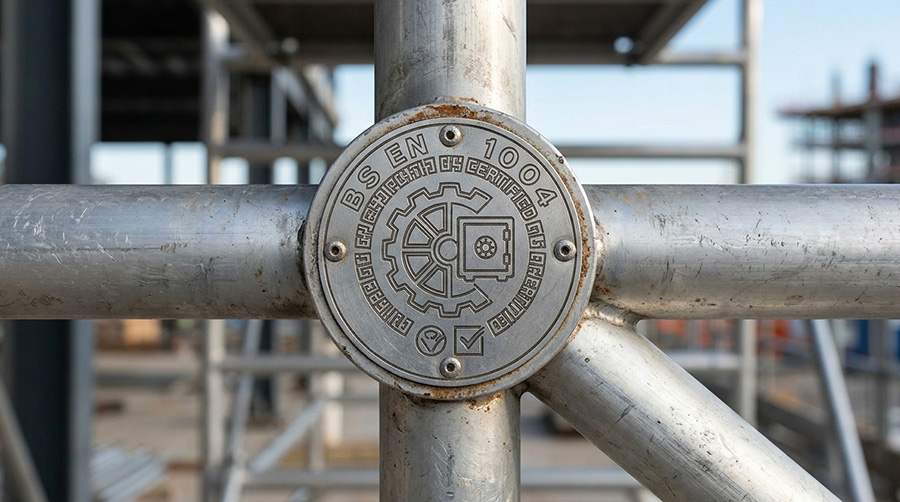
BS EN 1004-compliant towers used within their certified configuration are self-verifying under the standard. However, on DM-regulated project sites, towers used above certain height thresholds may be subject to additional inspection or permit requirements depending on the project classification. Quad Dream's rental towers carry BS EN 1004 certification and are used regularly on Dubai Municipality-regulated projects.
3. Can I stack extra frames on a rented aluminum tower to reach a higher ceiling?
No. Modifying a rented tower beyond the manufacturer's specified configuration voids its BS EN 1004 certification and creates an unengineered structure with no compliant load or stability data. The correct approach is to contact the rental supplier and request a tower pre-configured for the required working height.
4. What is the difference between platform height and working height for a scaffold tower?
Platform height is the level at which the operative stands. Working height adds approximately two metres for arm reach and is the figure referenced in standards as the usable access height. A tower with a 10-metre working height has its platform positioned at approximately 8 metres.
5. Are aluminum scaffold towers suitable for outdoor use in UAE desert conditions?
Yes, when correctly configured for the environment. UAE outdoor deployments must account for shamal wind loading and sand accumulation on platforms, both of which affect stability calculations. Experienced scaffolding contractors specify outriggers even at heights below the outdoor maximum on exposed sites, and caster wheel performance on outdoor surfaces requires verification before the tower is put into service.
Safe Height Is a Configuration Decision, not a Number
The height limit for an aluminum mobile tower is one variable in a multi-factor compliance question. The correct answer for any specific project depends on the base configuration, outrigger deployment, floor surface, duty class, and environmental conditions at that site. None of those factors are visible on a supplier's spec sheet.
Contractors working across Dubai's commercial and residential construction environment are better protected when their scaffolding supplier pre-configures rental equipment for the declared use case rather than dispatching frames and leaving setup decisions to site teams. The difference between those two approaches is where compliance exposure is created or avoided.


