



Table of Contents.
- What Makes Mobile Scaffolding Towers Different from Fixed Scaffolds?
- Common Mobile Scaffolding Tower Hazards
- How to Prevent Mobile Scaffold Tower Tip-Overs
- How to Prevent Falls from Mobile Scaffolding Towers
- Mobile Scaffold Tower Inspection Requirements
- How to Safely Move a Mobile Scaffold Tower
- Mobile Scaffolding Tower Safety Checklist
- Who Is Responsible for Mobile Scaffold Tower Safety?
- Frequently Asked Questions
- Building a Safer Mobile Scaffolding Habit on Every Job
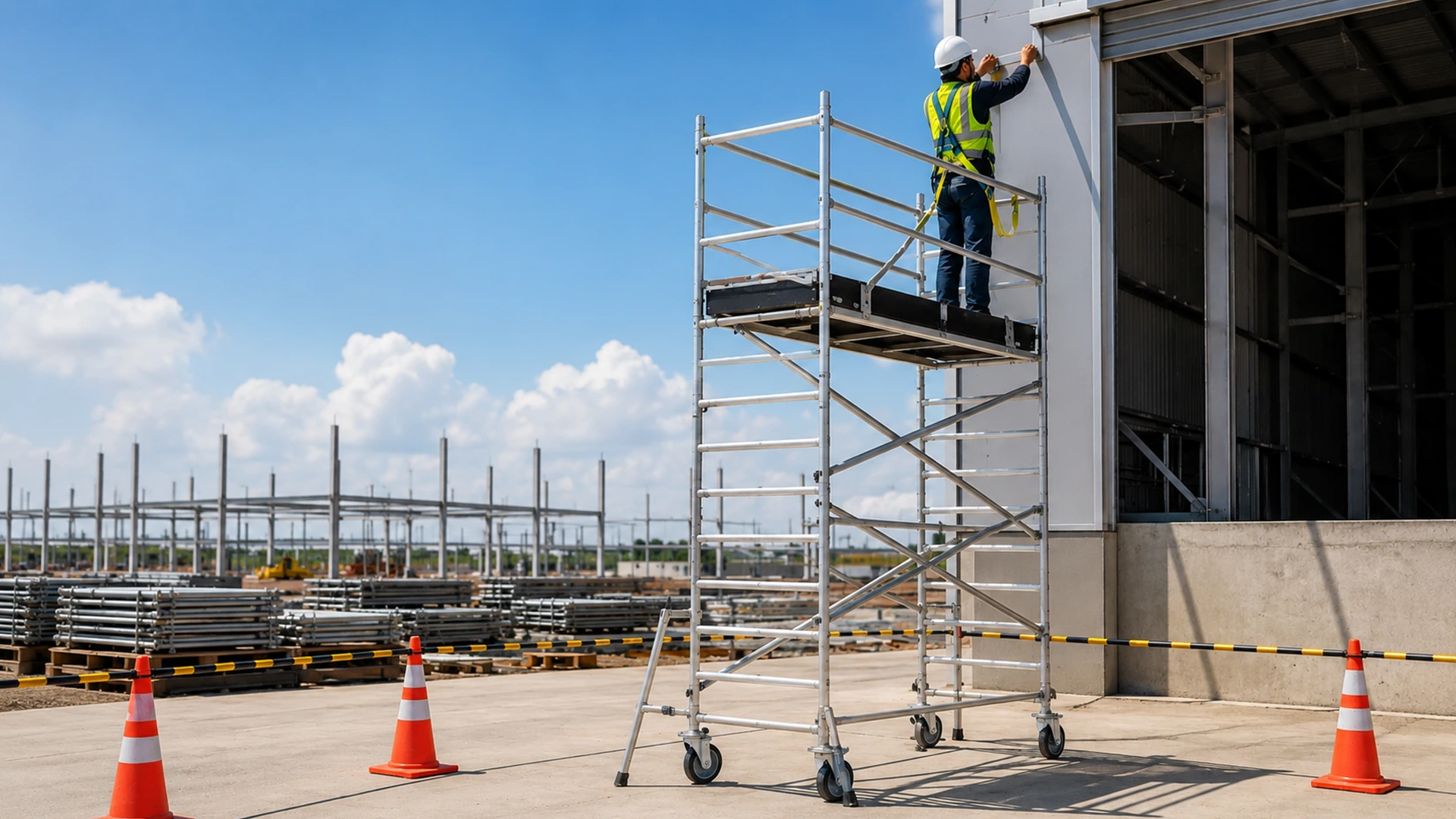
Mobile scaffolding towers provide a practical way to work at height for painting, MEP installation, maintenance, inspection and other jobs where access needs to be repositioned frequently. However, that mobility also introduces specific risks. Tip-overs, falls, uncontrolled movement, improper assembly, overloading and contact with electrical hazards are among the main mobile scaffolding hazards that need to be controlled.
Good mobile scaffolding tower safety starts with selecting and assembling the tower correctly, inspecting it before use and following safe practices every time it is moved. This guide explains the common hazards, how to prevent them and the checks workers and supervisors should make throughout the job.
What Makes Mobile Scaffolding Towers Different from Fixed Scaffolds?
Unlike fixed scaffolding, a mobile tower is supported on wheels or castors so that it can be repositioned as work progresses. OSHA describes mobile scaffolds as supported scaffolds set on wheels or castors and notes their common use for activities such as painting and plastering where workers frequently need to change position.
This flexibility makes them convenient, but it also changes how stability needs to be managed. Wheels must be secured while the tower is in use, the structure needs to remain plumb and level, and the supporting surface must be suitable.
Frequent movement also means site conditions can change each time the tower is relocated. Effective mobile access tower safety therefore requires users to consider not only how the tower is assembled but also where and how it is being used.
Common Mobile Scaffolding Tower Hazards
Understanding the common mobile scaffolding tower hazards is the first step toward controlling them. Many incidents occur when a tower is assembled incorrectly, positioned on an unsuitable surface or used outside its intended configuration.
Tip-Overs from Uneven Ground or Movement
A tip-over occurs when a mobile tower loses stability and overturns. Uneven or sloping ground, unlocked castors, insufficient stabilization, excessive height and sudden movement can all contribute to this risk.
A tower can also become unstable if workers attempt to move it incorrectly or if its configuration does not provide adequate stability for its height and intended use.
Falls From Height Due to Missing Guardrails
Falls can occur when working platforms do not have appropriate edge protection or when workers climb the outside of the tower rather than using the designated access system.
Missing guardrails, midrails or improperly installed platforms can leave workers exposed to open edges. OSHA requires fall protection for employees working on scaffolds more than 10 feet (3.1 m) above a lower level and specifies guardrail requirements for scaffold platforms.
Structural Failure from Incomplete Assembly or Overloading
Structural failure occurs when the tower or one of its components cannot safely support the forces placed on it.
Missing braces, unsecured connections, incorrect components or loads exceeding the manufacturer's limits can compromise the structure. OSHA requires mobile scaffolds to be plumb, level and squared, with appropriate bracing and secured brace connections.
Falling Tools and Materials
Tools, equipment and materials left near platform edges can fall onto people working or passing below.
Toe boards and other appropriate falling-object controls can help reduce this risk. Good housekeeping is equally important: platforms should not become cluttered with loose tools, materials or debris.
Uncontrolled Movement While Workers Are on the Platform
Uncontrolled movement occurs when the tower rolls or shifts unexpectedly while being used. This can happen when wheel locks are not engaged, the surface is sloped or workers attempt to pull themselves along while standing on the platform.
OSHA requires mobile scaffold wheels or castors to be locked while the scaffold is being used in a stationary position.
Electrical Contact Near Overhead Lines
Electrical contact can occur when a mobile tower, worker, tool or material gets too close to energized electrical conductors.
This risk can increase during movement because the tower is being repositioned through the work area. OSHA's scaffold safety guidance specifies maintaining at least 10 feet from energized power lines, although applicable clearance requirements can depend on voltage and circumstances.
How to Prevent Mobile Scaffold Tower Tip-Overs
Effective scaffold tower tip over prevention starts with establishing a stable base.
The tower should stand on a firm, level surface capable of supporting its weight and the intended working load. Castors should be properly secured to the tower and locked whenever the tower is stationary and in use. Adjustable legs or appropriate levelling devices should be used according to the manufacturer's instructions rather than improvised supports.
The height-to-base relationship also matters for scaffold tower stability. OSHA's supported-scaffold rules generally require guys, ties, braces or equivalent measures where a scaffold exceeds a 4:1 height-to-base ratio, while its specific rules for moving occupied mobile scaffolds use a more restrictive 2:1 ratio unless the scaffold meets recognized stability testing requirements. These figures should not replace the tower manufacturer's configuration instructions.
Mobile scaffold outriggers should be installed where required by the tower design and manufacturer's instructions. OSHA also requires outrigger frames, when used during occupied movement under its permitted conditions, to be installed on both sides.
Wind is another important factor, particularly outdoors or around exposed UAE buildings. PASMA advises ceasing work and dismantling a mobile access tower when average wind speed reaches 17 mph (27 km/h or 7.6 m/s). It also warns against attaching netting, boards or sheeting to a mobile tower because these can significantly increase wind loading. The manufacturer's instructions and applicable site requirements should always take precedence where they impose different or stricter limits.
How to Prevent Falls from Mobile Scaffolding Towers
How to prevent falls from mobile scaffolding towers comes down to maintaining proper edge protection, safe access and disciplined working practices.
Working platforms should have the guardrails, midrails and toe boards required by the applicable tower design and safety requirements. Workers should use the tower's designated internal access system rather than climbing the outside frames unless the system is specifically designed to provide another approved access method.
Platforms should also be kept clear. Loose tools, cables, materials and debris can create trip hazards, particularly on a relatively compact tower platform. OSHA specifically prohibits work on scaffold platforms cluttered with debris.
Where personal fall protection is required by the applicable regulation, risk assessment or tower configuration, it must be used with a suitable anchorage arrangement. Fall-arrest equipment should not simply be attached to an arbitrary part of a mobile tower.
The appropriate scaffolding fall protection method should therefore be established before work begins rather than improvised after the tower has been erected.
Mobile Scaffold Tower Inspection Requirements
A scaffold inspection should establish that the tower is complete, correctly assembled and suitable for use in its current location.
Before erection, components should be checked for obvious damage, distortion, excessive corrosion and missing or defective parts. Castors, locking mechanisms, braces, platforms, guardrails, pins and connections should all be suitable for the tower system being assembled.
Once assembled, the tower should be checked by a trained or competent person as required by the applicable regulations, site procedures and manufacturer's instructions. OSHA, for example, requires scaffolds and their components to be inspected for visible defects before each work shift and after an event that could affect structural integrity.
Inspection should not stop after initial assembly. A tower used over several days may be moved, altered, exposed to weather or affected by other site activities.
Cracked or deformed components, defective castors, missing locking pins, incomplete bracing, significant corrosion or other damage that could compromise safety should result in the tower being removed from service until the issue is properly addressed. OSHA requires damaged or weakened scaffold components that no longer meet applicable strength requirements to be repaired, replaced, braced or removed from service.
How to Safely Move a Mobile Scaffold Tower
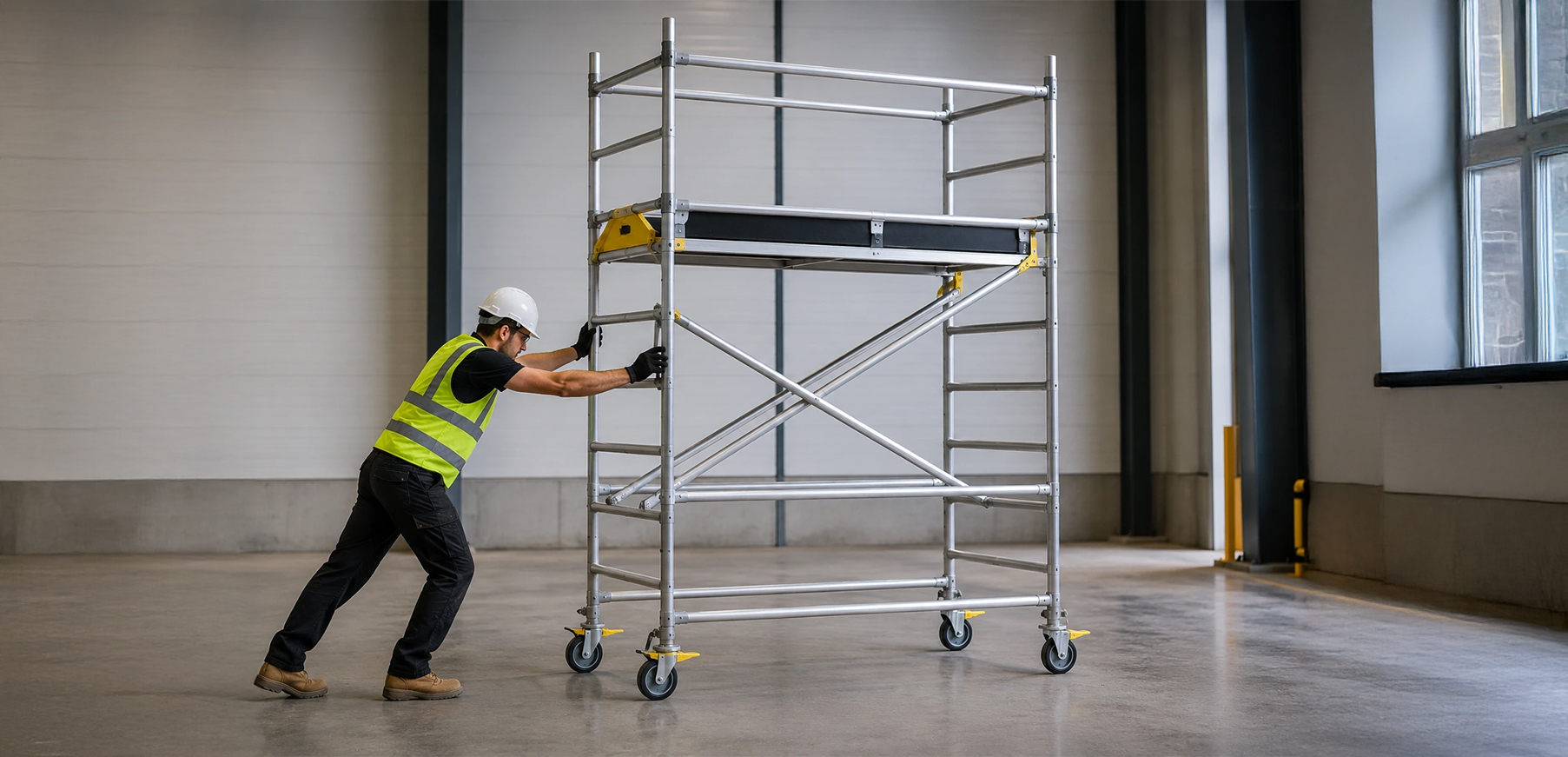
Moving the tower should be treated as a separate work activity rather than simply pushing it to the next location.
Before moving, follow the manufacturer's instructions and reduce the tower to the configuration required for safe movement. As a conservative site practice, workers, loose tools and materials should be removed unless the tower is specifically designed and the applicable rules expressly permit occupied movement under defined conditions.
The route should be checked for holes, slopes, debris, cables, overhead obstructions and other hazards. Manual force should be applied close to the base to minimize overturning forces. OSHA specifies that manual force should be applied as close to the base as practicable and no more than 5 feet (1.5 m) above the supporting surface.
Once repositioned, check that the tower is level and stable and immediately re-engage the castor locks before anyone resumes work.
Do not move a tower where high winds, unsuitable ground, obstacles or nearby electrical hazards make movement unsafe.
Although OSHA allows workers to remain on certain mobile scaffolds during movement when a detailed set of conditions is satisfied, this should not be interpreted as a general rule that occupied movement is safe. Follow the tower manufacturer's instructions and the project's applicable safety requirements.
Mobile Scaffolding Tower Safety Checklist
A consistent mobile scaffolding tower safety checklist can help prevent simple oversights from developing into serious hazards.
Before Erecting
- Check the ground is firm and level.
- Inspect all components for damage.
- Confirm all parts belong to the tower system.
- Check castors and locking mechanisms.
- Identify nearby electrical hazards.
- Review expected wind and weather conditions.
- Follow the manufacturer's assembly instructions.
Before Use
- Confirm the tower is plumb and level.
- Engage all castor locks.
- Check braces and locking pins.
- Install required outriggers or stabilizers.
- Check platforms are fully secured.
- Confirm guardrails and toe boards are in place.
- Keep access routes and platforms clear.
- Verify the intended load is within limits.
- Confirm the required inspection has been completed.
During Use / Before Moving
- Keep platforms free of unnecessary materials.
- Never exceed the manufacturer's load limits.
- Monitor weather and wind conditions.
- Remove loose tools and materials before moving.
- Follow site rules regarding occupied movement.
- Check the intended travel path.
- Push from close to the base.
- Re-level the tower after moving.
- Re-lock every castor before use.
- Recheck stability before climbing.
Who Is Responsible for Mobile Scaffold Tower Safety?
Mobile scaffold tower safety is a shared responsibility, but individual duties should be clearly assigned.
Employers and site management need to ensure that appropriate equipment, procedures, supervision and training are provided. People assembling, altering, dismantling or inspecting a tower should have the competency required by the applicable rules and site procedures.
Workers also need to use the tower according to the approved configuration and report defects or unsafe conditions rather than modifying components themselves.
Inspection sign-off should be carried out by the competent or authorized person identified under the project's safety system. OSHA similarly places scaffold inspection responsibility on a competent person.
Frequently Asked Questions
1. What is the biggest safety risk with mobile scaffolding towers?
Tip-over and falls from height are among the most serious mobile scaffolding hazards. Tip-over risk increases when a tower is placed on unsuitable ground, incorrectly stabilized, exposed to wind, improperly loaded or moved incorrectly. Falls can result from missing edge protection, unsafe access or poor platform housekeeping.
2. How often should a mobile scaffold tower be inspected?
Inspection frequency should follow the applicable regulation, manufacturer's instructions and project requirements. OSHA requires scaffolds and components to be inspected for visible defects by a competent person before each work shift and after any event that could affect structural integrity.
3. Can a mobile scaffold be moved with workers still on it?
The safest general practice is to clear workers before moving unless occupied movement is expressly permitted by the tower design and applicable safety requirements. OSHA permits occupied movement only under specific conditions involving surface levelness, stability, outriggers and worker positioning; it is not a blanket permission to ride a moving tower.
4. What wind speed is unsafe for a mobile scaffold tower?
There is no single figure that should override the tower manufacturer's instructions or site risk assessment. PASMA advises stopping work and dismantling a mobile access tower when average wind speed reaches 17 mph (27 km/h or 7.6 m/s). Local wind conditions around buildings can be considerably higher than general forecasts indicate.
5. Do mobile scaffold towers need outriggers?
Not every tower configuration requires the same outriggers. Their use depends on the tower design, height, base dimensions and manufacturer's instructions. Where outriggers or stabilizers are specified, they should be correctly installed and fully deployed before the tower is used.
Building a Safer Mobile Scaffolding Habit on Every Job
Most mobile tower incidents can be reduced through consistent habits: assemble the equipment correctly, inspect it before use, maintain a stable base, control falls and falling objects, and treat every tower movement as a safety-critical task.
Mobile scaffolding tower safety should continue throughout the job rather than ending once the tower has been assembled. Conditions can change every time equipment is loaded, weather changes or the tower is moved to a new location.
For projects requiring reliable mobile access equipment, Quad Dream can help you select mobile scaffolding solutions suited to your site's access, working-height and operational requirements.


